What is the Science Behind Essential Oils for our Emotional Health
What is the science behind essential oils for our emotional health? These beautiful healing catalysts? Are they in fact magical? Or are they only a placebo? Do they work?
There are articles floating around the Internet that state that essential oils do not work as they are purported to. Essential oils work through our olfactory system (sense of smell) and we know that our sense of smell plays an integral role in daily life. So how do essential oils work exactly?
In an excerpt from my most recent book:
“Have you ever wondered why certain smells have the ability to conjure up memories and physical feelings so distinctly? Odor/memory links like these are known as the Proust Phenomenon in credit of French writer Marcel Proust, who romanticized the memories evoked by the smell of his biscuit after soaking in a cup of tea in his novel À la recherche du temps perdu (1,2).“
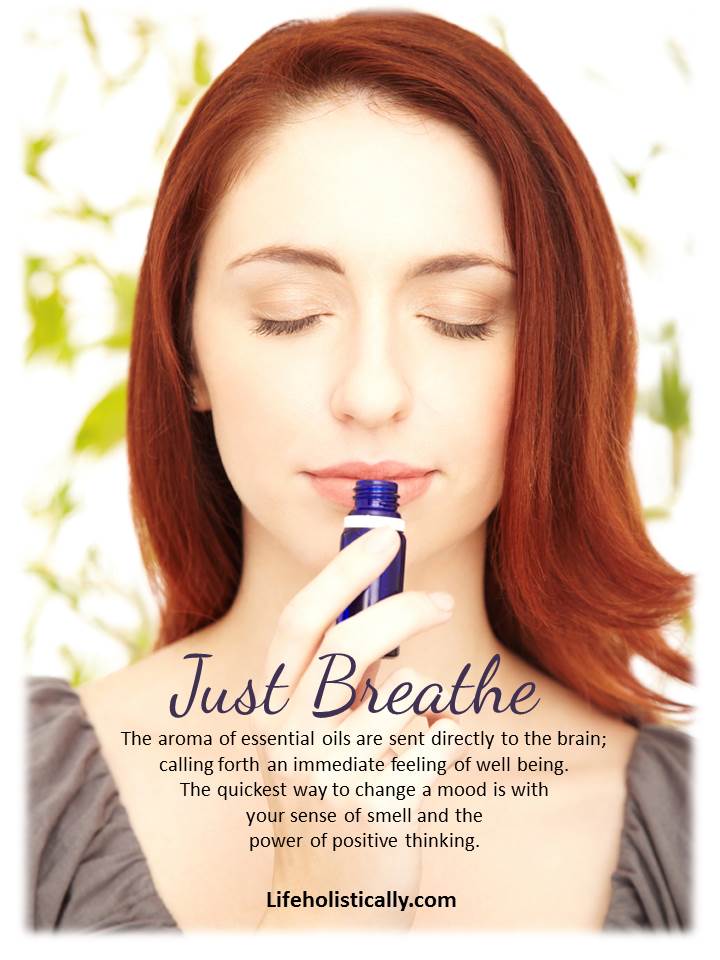
How do we interpret an aroma?
Our olfactory system is our bodily structure that supports our sense of smell. Humans can identify at least 1 trillion different odors, whereas a dog can detect upwards of 10,000 times that number (2).
Our sense of smell goes through five stages, those are: detect, transmit, perceive, analyze, and store. These stages cycle remarkable quickly. Up inside our nose, inside each nostril is the beginning of our olfactory system called the olfactory epithelium. The olfactory epithelium is the size of a small postage stamp in each nostril and has 40 million sensory neurons, capable of detecting .0000000013 of an ounce of an aroma in a single breath of air (3).
Once our sensory neurons detect an aroma, signals are sent to the brain via our olfactory bulbs. These bulbs are actually a part of the brain, they send signals to two places and for two purposes:
1. Signals are sent to our limbic system, comprised of the hypothalamus, amygdala, thalamus, and hippocampus, which is the most primitive brain center influencing our emotions as well as our memories.
2. Signals are also sent to the neocortex, which is what is deemed higher-order brain functions such as cognition, conscious thought, the foundation of our motor commands, and spatial reasoning and perception (4).
Therefore, as essential oil odor signals are sent directly to the limbic system, it is easy to see the correlation of the inhalation of essential oils and the effects on our emotions. Essential oils are in fact for emotional wellness!
“When we begin to use oils after blending them artfully for their desired chemical constituents, we quickly start to see how they can turn around melancholy, soothe fears, center us, uplift our mood, and promote an overall sense of calm. Simply put, essential oils encourage and support our well-being.” -Leslie Moldenauer, Emotional Healing with Essential Oils
Digging Deeper
Let’s look at a bit deeper at the sympathetic nervous system, our limbic system, and more specifically the amygdala. Our amygdala plays a role in emotions and behavior, and the primary role although oversimplified is identified by scientists is to process fear.
This is where freeze, fight, or flight begins, triggering the sympathetic nervous system (SNS). What do we know about the sympathetic nervous system? When triggered by stress a few key things happen:
*Heart rate accelerates
*Our bronchial airways open up (assisting us in flight)
*Blood pressure rises
*Constricted blood vessels (causing a likelihood of tingling extremities)
*Not an all-inclusive list
So what could essential oils role be here to combat this SNS stress response? Can essential oils calm us during times of stress and anxiety? When we look at one of the most commonly known essential oil constituent of linalool, we see they can help quite a lot.
*Linalool is prevalent in essential oils such as Bergamot, Ho Wood, Lavender, Neroli & Petitgrain, Rosalina, and many others.
Essential Oil Studies
Below are a few of the top studies showing how this one constituent can in fact play a large role in reversing the stress response.
1. The Effects of Lavender Oil Inhalation on Emotional States, Autonomic Nervous System, and Brain Electrical Activity (5)
Lavender oil caused a significant decrease in blood pressure, heart rate, and skin temperature in 20 healthy volunteers. The subject felt more themselves, fresher and relaxed. Alpha waves were also measured using an electroencephalogram (EEG), and results showed an increase in brain activity with inhalation, specifically an increase in Theta brain waves and a decrease in Beta waves, associated with relaxation.
2. Aromatherapy Improves Work Performance Through Balancing the Autonomic Nervous System (6)
This particular study analyzed the efficacy of aromatherapy in improving work performance and reducing workplace stress. Individuals in the aromatherapy group were assigned a task in from of the computer until completion while inhaling petitgrain essential oil.
The conclusion from the study: “Aromatherapy (inhaling petitgrain essential oil) can improve performance in the workplace. These results could be explained by an autonomic balance on the sympathetic/parasympathetic system through a combined action of the petitgrain main components (linalyl acetate, linalool, and myrcene). The final effect could be an improvement of the mental and emotional condition by a combination of reducing the stress level and increasing the arousal level of the participants in terms of attentiveness and alertness”.
3. Effects of inhaled Linalool in anxiety, social interaction and aggressive behavior in mice (7)
In this study, the inhalation of linalool showed anxiolytic (anti-anxiety) properties as well as decreased aggressive behavior in the light/dark test (mice exhibit aggression in the dark). One percent linalool was shown to be just as effective as diazepam, a common pharmaceutical used to combat anxiety.
There are many chemical constituents that assist in calming the mind and body, linalool is just one example compared to a drop of water in an ocean. Do keep in mind that essential oils are very synergistic. Numerous components come together to provide you with beautiful therapeutic properties that one constituent alone couldn’t.
So when we see reports that essential oils are nothing more than placebo…..I can’t help but laugh. We MUST look at the indisputable science as well as our own a-ha moments when we inhale them.
It is abundantly clear that essential oils do in fact support our emotional health!
Need help discerning what essential oil(s) may be right for you or a loved one? Grab a copy of my latest book, Emotional Healing with Essential Oils: Relieve Anxiety, Stress, Depression, and Mood Imbalances Naturally. I share 50 essential oils that are effective for our emotional health and over 100 easy to blend recipes.
Wishing you abundant health and happiness,
Leslie xo
References
(1) Moldenauer, L. (2019). Emotional healing with essential oils: Relieve anxiety, stress, depression, and mood imbalances naturally. Emeryville, CA: Rockridge Press.
(2) “Proust Revisited: Odours as Triggers of Aversive Memories.” Taylor & Francis. Accessed May 02, 2019. https://www.tandfonline.com/doi/abs/10.1080/02699931.2011.555475
(3) Human nose can detect 1 trillion odours. (n.d.). Retrieved June 26, 2020, from https://www.nature.com/news/human-nose-can-detect-1-trillion-odours-1.14904
(4) Peterson, D. (2012) Aroma 101. American College of Healthcare Sciences
(5) Neocortex (brain). (n.d.). Retrieved June 26, 2020, fromhttps://www.sciencedaily.com/terms/neocortex.htm
(6) The Effects of Lavender Oil Inhalation on Emotional States, Autonomic Nervous System, and Brain Electrical Activity https://pubmed.ncbi.nlm.nih.gov/22612017/
(7) Huang, L., & Capdevila, L. (2017). Aromatherapy Improves Work Performance Through Balancing the Autonomic Nervous System. The Journal of Alternative and Complementary Medicine, 23(3), 214-221. doi:10.1089/acm.2016.0061
(8) Linck, V., Silva, A. D., Figueiró, M., Caramão, E., Moreno, P., & Elisabetsky, E. (2010). Effects of inhaled Linalool in anxiety, social interaction, and aggressive behavior in mice. Phytomedicine, 17(8-9), 679-683. doi:10.1016/j.phymed.2009.10.002
Like so many practices in life, I encourage you to become educated on the proper use of essential oils. When using them, please do so cautiously, understanding that there is often misinformation on the internet. You can be assured that I support only educated and proven resources. While essential oils should not be feared they should be respected and used properly to ensure the safety of the individuals using them.
Please note that I am not a medical practitioner. The content of this website is provided for general informational purposes only and is not intended as, nor should it be considered a substitute for, professional medical advice. Do not use the information on this website for diagnosing or treating any medical or health condition. If you have or suspect you have a medical problem, promptly contact your professional healthcare provider. By using this website, you assume full responsibility and liability for your own actions.