by Leslie Moldenauer | | Essential Oils, Uncategorized
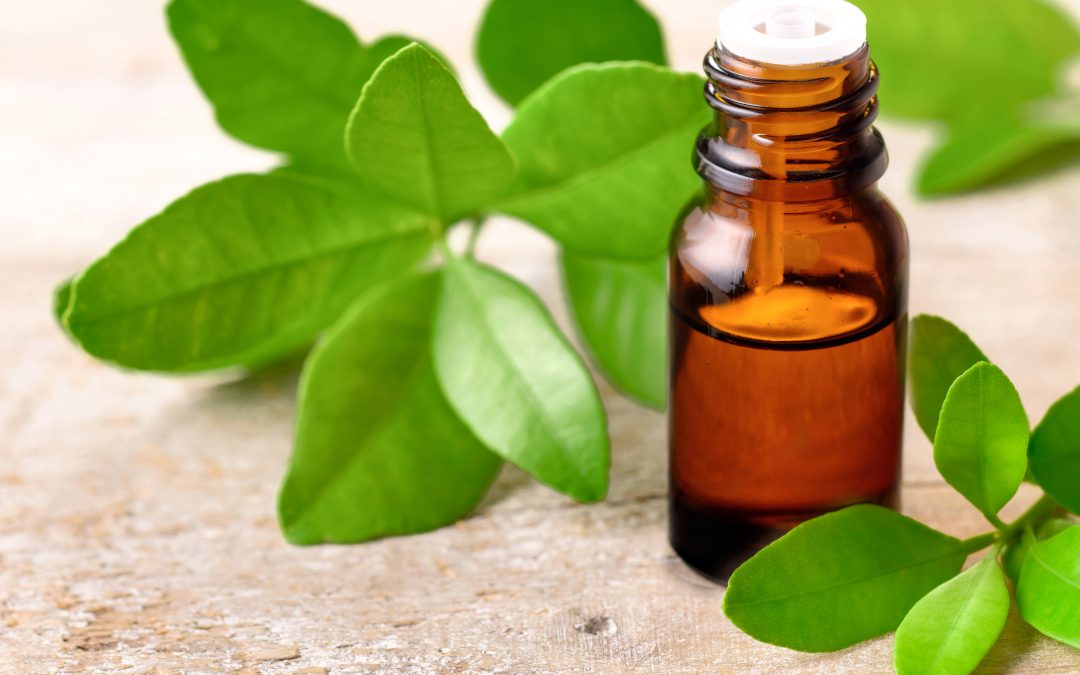
Petitgrain
Botanical Name: Citrus aurantium var amara or bigardia
Aroma: Sweet and light floral aroma (Not as in your face as Neroli essential oil)
Plant Parts Used: Leaves and twigs
Method of Extraction: Steam distillation
Precautions: There are no known safety considerations for this essential oil.
Blends Well with Top 5 for Emotional Wellness: Bergamot, Lavender, Roman Chamomile, Sweet orange, and Ylang Ylang.
Aroma Mantra: With every breath, I am calming my mind
Historical Use
Historical use of the plant points us to cultures in South American and China using the leaves of the bitter orange to treat cold and flu and help with digestive complaints such as indigestion and nausea (1).
Petitgrain essential oil is used extensively in perfumery, but there are quite a few benefits to the oil, I will cover those for emotional wellness here.
What Do the Studies Tell Us?
In a study published in 2017 in the Journal of Alternative and Complementary Medicine, Petitgrain essential oil improved the mental and emotional conditions of the participants (2). Petitgrain essential oil was inhaled through diffusers while participants worked on their computers. The oil improved performance and reduced stress levels. This action was due to the constituents’ linalyl acetate, linalool, and myrcene.
Emotional Wellness
Reach for Petitgrain essential oil for a multitude of stress-related concerns and has a great ability to sooth and quiet the mind. Do you struggle with worry, overanalyzing or anxiety? When you lay down at the end of the night to sleep does your mind take you away to all of the worries in your life? If so, you owe it to yourself to try this sweet little oil. Petitgrain is the first oil I reach for when my oldest is having issues falling asleep because he cannot stop his thoughts or get a song out of his head and is feeling frustrated.
Petitgrain has an affinity for the central nervous system, therefore, when it is inhaled your pulse slows, breathing settles, and the body reverts to the parasympathetic nervous system, rest and restore mode. Place it in your diffuser before you lay down at night. Put some in an aromatherapy inhaler when you need to focus. Petitgrain essential oil is definitely your ally here.
What Other Professionals Say
According to long-standing aromatherapist Patricia Davis, “Where Neroli evokes the highest psychic or spiritual levels of mind, Petitgrain relates more to the conscious, intellectual mind. Inhale this oil when you need mental clarity (3).”
Kurt Schnaubelt states that “Petitgrain essential oil is non-toxic and can be used liberally in preparations used to address stress and imbalance of the autonomic nervous system (4).”
Julia Lawless recommends blending with Petitgrain bigarade for the psyche for stress, tension, anxiety, and low mood (5).
Now Try This
Ready to try this oil in practice? The following blend is from my book, Aromatherapy for Kids book, but is effective for all ages (6).
Antsy Pantsy (Master Blend)
Mandarin Red 15 drops
Lavender 10 drops
Petitgrain 5 drops
Cedarwood 5 drops
You can utilize this master blend properly diluted in an inhaler, diffuser, or in an aroma bath. Store unused portions in a cool spot.
Please note that I am not a medical practitioner. The content of this website is provided for general informational purposes only and is not intended as, nor should it be considered a substitute for, professional medical advice. Do not use the information on this website for diagnosing or treating any medical or health condition. If you have or suspect you have a medical problem, promptly contact your professional healthcare provider. By using this website, you assume full responsibility and liability for your own actions.
References
(1) Decleor, Paris. Petitgrain Essential Oil. Retrieved from https://www.decleor.co.uk/blogs/petitgrain.html
(2) Huang, L., & Capdevila, L. (2017). Aromatherapy Improves Work Performance Through Balancing the Autonomic Nervous System. The Journal of Alternative and Complementary Medicine, 23(3), 214–221. doi: 10.1089/acm.2016.0061
(3) Davis, Patricia. (1996) Subtle Aromatherapy. Saffron Walden: C.W. Daniel
(4) Schnaubelt, K. (2011). The healing intelligence of essential oils: the science of advanced aromatherapy. Rochester, VT: Healing Arts Press.
(5) Rhind, J. (2016). Aromatherapeutic blending: essential oils in synergy. London: Singing Dragon.
(6) Moldenauer, L. (2017). Aromatherapy for Kids: Safe and Sound. CreateSpace Independent Publishing Platform
Want to learn more about essential oils for our Emotional Wellness? Grab my latest bestselling book here-Emotional Healing with Essential Oils: Relieve Anxiety, Stress, Depression, and Mood Imbalances Naturally

by Leslie Moldenauer | | Essential Oils
According to the Merriam-Webster dictionary:
Concentration
Is the act or process of concentrating: the state of being concentrated
Focus
A point of concentration
After working in a school for almost a year, I have seen quite a lot and its left me thinking, are we unrealistic in some of our expectations?
Teachers ask children on the regular “to focus” and “to concentrate”, and I found myself wondering, “what does that even mean to them”?
My background is a bit different from most. I have been practicing yoga for nearly 15 years and meditating on the regular for over a decade. I know focus. I know it because I practiced it. I know it because I was committed to learning how to sit still and quiet my mind. It took self-discipline and plenty of self-awareness.
Do small children even have the mental capacity? The cognitive skill?
When we look at what the experts tell us, on average, a 5-year-old child should be able to stay focused on a task for 2-5 minutes [1]. This is addressing tasks such as coloring a picture, putting together a puzzle, or practicing writing their letters. 2-5 minutes is all they have. This is an average. Some may only have one minute. How does this increase? Through practice, through repetition, through skill. It is a skill. Energetic children could be on the lower end. Notice my choice of words there (energetic).
I understand that Attention Deficit Disorder (ADD) and (Attention Deficit Hyperactivity Disorder) ADHD are real, and I am not trying to discount that in this article today in any way, but I am saying that it is over diagnosed. Severely so.
A few great tips for helping small children learn this skill:
* Giving them enough activity, time to play and get their wiggles out.
This goes for ALL children, not just young ones. Oftentimes children are given about 20 minutes outdoors in a 7-hour time window. Gym only happens once or twice a week. This is NOT enough. It would not be enough for me, and I do not have any issues with focus.
* Let them work on projects or play games that require their focus. Memory games are a great choice. When the child has completed a task, tell them “Good job, you focused or you concentrated on that very well”. By reinforcing with them what they actually did, they will begin to learn what that means. Practice.practice.practice….and plenty of reinforcement.
* Homework is done at the same time every day begins to foster a habit. Reward them with positive reinforcement when they have focused on the task and completed it.
*If you expect a small child to complete a task, they must have time to be active first.
*A child that struggles would benefit from activities alone over team sports that promote focus, like karate or dance for example.
I sat down with my 12-year-old the other day while this article was curating in my conscious, and asked him what the word focus meant to him. He said, “to concentrate”. I said OK, but what does concentrate mean, he smiled and said, “to focus on a task”. We both laughed and I said to dig deeper, how did you learn what this meant, and how did you get good at it.
He said, “I think it is like riding a bike”. There is not a clear set of instructions, but once you practice it over and over again, and are cheered on by your mom, you get really good at it, then you just never forget how it’s done”. He went on to say, in school is can be hard, because you are hardly ever allowed to talk, so there are moments when I wish I could get up, run around, yell and stuff…then sit back down and get busy”. Now, this is coming from a 12-year-old with no focus issues. This speaks volumes.
How to help and what hinders
“Approximately 3 to 5 percent of school-aged children have ADHD, according to much of the literature over the past several years, including the Surgeon General’s Mental Health Report (1999, 2001)” [1]. So there is a possibility that 1 or 2 children in a classroom of 20+ children will truly have an issue.
BUT, not everyone that has trouble focusing has an issue, especially if they are not allowed to move or talk much within their day. This is a fact often overlooked. Cause and effect……so important.
Outside of the examples I have given to help teach small children how to practice focusing, what can increase the issue?
*We can easily see that children do not get to move nearly enough in their day. This needs to be addressed.
*Nutrition plays a HUGE part in exacerbation of symptoms. Studies published in The Lancet, Pediatrics, and Journal of Pediatrics found that food additives do in fact affect many children with ADHD negatively [2] [3] [4]. Some even infer that artificial coloring and flavors, as well as the preservative sodium benzoate, a preservative found in specific food and drink, can make even some kids without ADHD hyperactive [5]. Let that sink in. Food is a HUGE player in this equation for most children.
*While the studies are not entirely conclusive, research is suggesting that there is a role of essential fatty acids, particularly omega-3’s and cognitive disorders including ADHD. These studies reflect low levels of omega-3’s in those that suffer from the condition [6].
*Good gut health is imperative. “The gut-brain axis (GBA) refers to the close link and constant communication between our ‘two brains’: the one that everyone knows about in our head, and the one that we’ve just recently discovered in our gut,” explains Shawn Talbott, Ph.D., a nutritional biochemist [7].
Talbott states that there is a series of complex nerves surrounding our gut called the enteric nervous system, and therefore working to heal the gut will have a profound effect on the central nervous system (CNS) as a whole. This is news that everyone should hear. From ADD, ADHD, anxiety, depression, and other mental health matters…. restoring gut health is really a critical piece that should not be overlooked.
So what products do I recommend? There are many out there, and not all are created equal. I will list two below, but if you would like to discuss it further, my door…or inbox is always open. Lifeholistically@gmail.com
Adults
Pro-45 Live Biotics (11 patented strains. Dairy Free. Delayed release veggie caps)
Kids
Nordic Naturals Probiotic Gummies (1.5 Billion Live Cultures in Synergistic Blend of Prebiotic Fiber)
(Affiliate links)
Ideally, I would encourage you to take a look at my online gut health program (the liver and overall stress levels and management included), found here. I go into this topic in great detail, a deep dive, and it is a great investment in your health. I cover diet, nutrition, herbs, essential oils, and mind/body balance techniques.
If you want to know how diet is affecting your child, this article is a must read
https://www.additudemag.com/feed-your-childs-focus-adhd-diet-nutrition/
Here is more on sodium benzoate
http://naturallysavvy.com/eat/this-is-why-sodium-benzoate-is-so-scary
What about essential oils?
Depending on the source, you can find many different recommendations for oils to help here. Because I am a believer that essential oils are not a one size fits all, especially for those with a diagnosed conditions such as ADD/ADHD, I am going to direct my attention to general concentration and focus, as well as calming for times of frustration as well as help with a restful night sleep.
Focus
Research has shown many times over that Rosemary (CT 1,8 cineole) essential oil is great for focus as well as memory. This study I am referencing shows that cognitive function and task abilities improved when subjects inhaled the aroma of Rosemary [9].
*Always do your due diligence and research to make sure that Rosemary or any essential oil I recommend is safe for you.
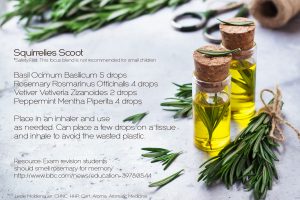
There are other essential oils that help to bring the calm and focus needed to complete a task. Antsy Pantsy is a great one to try for a child:
Antsy Pantsy (Master blend)
Mandarin Red (Citrus reticulata) 15 drops
Lavender (Lavandula angustifolia) 10 drops
Petitgrain (Citrus x aurantium) 5 drops
Cedarwood (Cedrus Atlantica) 5 drops
Blend and store in an amber or cobalt bottle in a cool place. Place in the number of drops according to your diffuser. Can also use in an inhaler.
Calming
This is a great blend to assist in calming both child and adult during times of frustration.
Just Hunky Dory (Master Blend)
Bergamot (Citrus bergamia) 15 drops
Lavender (Lavandula angustifolia) 10 drops
Lime (Citrus aurantium) 5 drops
Cedarwood (Cedrus atlantica) 3 drops
Vetiver (Vetiveria zizanoides) 2 drops
Blend and store in an amber or cobalt bottle in a cool place. Place in the number of drops according to your diffuser. Can also use in an inhaler. Not recommended on the skin unless you are using steam distilled lime and bergapten free Bergamot.
Sleep
A good night sleep is imperative for each and every one of us. Here are two bath blends, one especially for kids, and one just for you.
Children
Snug Bug (Master blend)
Vetiver (Vetiveria zizanoides) 4 drops
Sandalwood (Santalum spicatum) 8 drops
Petitgrain (Citrus aurantium var. Amara or Bigaradia) 8 drops
Lavender (Lavandula angustifolia) 12 drops
Blend and store in an amber or cobalt bottle in a cool place.
Use 3-5 drops of your master blend in a bath with 1 tbsp fragrance-free shampoo and 1 cup Epsom salts.
Adults
Blissful bath
Rose Absolute (Rosa x damascena) 6 drops
Lavender (Lavandula angustifolia) 4 drops
Epsom salt 1-2 cups
Unscented fragrance-free shampoo 1 tbsp
Full fat crème 1 cup
Bath Safety
When we look at basic chemistry, we know that essential oils will not mix with water, even when the water is hot. So what is the way to safely use essential oils in the bath? A proper diluent is necessary. The excipient needs to emulsify the water and oil properly to avoid skin irritation. A very small amount of fragrance-free organic shampoo is my number one choice to accomplish this. I say fragrance-free, as you want to avoid any possible chance of urogenital irritation. 1 tbsp of shampoo is all that is needed. I like to recommend a formulation like this: Epsom salt 1/2 cup (excellent to help your littles wind down before bed) Fragrance-free organic shampoo 1 tbsp Essential oil 2-4 drops Use the least amount for littles. Four drops are more appropriate for pre-teens/teens Mix into a container, then add to bath
Epsom salt, Himalayan sea salt, baking soda, etc., will not emulsify oil and water. Safety first! Always supervise small children. There is no “set” age for oil in the bath, but as a general precaution, if your child is still putting toys in the mouth, splashing, etc., don’t do it. I recommend waiting as long as you feel is needed, five or older may be a good starting point. Hydrosols will be the safer choice here for littles. Parents, please use your discretion.
I hope that I provided quality insight and food for thought on the topic, ways to improve health, happiness…and ability to focus.
To your health <3
Like so many practices in life, I encourage you to become educated on the proper use of essential oils. When using them, please do so cautiously, understanding that there is often misinformation on the internet. You can be assured that I support only educated and proven resources. While essential oils should not be feared they should be respected and used properly to ensure the safety of the individuals using them.
Please note that I am not a medical practitioner. The content of this website is provided for general informational purposes only and is not intended as, nor should it be considered a substitute for, professional medical advice. Do not use the information on this website for diagnosing or treating any medical or health condition. If you have or suspect you have a medical problem, promptly contact your professional healthcare provider. By using this website, you assume full responsibility and liability for your own actions.
BEFORE YOU GO! Remember to sign up for my FREE Facebook group! Hang out with me and THOUSANDS of other Essential Oil lovers looking to learn, click on to join Real Essential Oil Education Group!
Check out my FREE offer below!
References
[1] Focused Attention in Toddlers https://www.ncbi.nlm.nih.gov/pmc/articles/PMC2607062/
[2] Rief, Sandra F. “How To Reach And Teach Children with ADD/ADHD.” iBooks.
[3] Mccann, Donna, et al. “Food Additives and Hyperactive Behaviour in 3-Year-Old and 8/9-Year-Old Children in the Community: A Randomised, Double-Blinded, Placebo-Controlled Trial.” The Lancet, vol. 370, no. 9598, 2007, pp. 1560–1567., doi:10.1016/s0140-6736(07)61306-3.
[4] Kaplan, Bonnie J., Jane Mcnicol, Richard A. Conte, and H. K. Moghadam. “Overall Nutrient Intake of Preschool Hyperactive and Normal Boys.” Pediatrics, vol. 17, no. 2, 1989, pp. 127-32.
[5] Rowe, Katherine S., and Kenneth J. Rowe. “Synthetic Food Coloring and Behavior: A Dose Response Effect in a Double-Blind, Placebo-Controlled, Repeated-Measures Study.” The Journal of Pediatrics, vol. 125, no. 5, 1994, pp. 691-98.
[6] Mccann, Donna, et al. “Food Additives and Hyperactive Behaviour in 3-Year-Old and 8/9-Year-Old Children in the Community: A Randomised, Double-Blinded, Placebo-Controlled Trial.” The Lancet, vol. 370, no. 9598, 2007, pp. 1560–1567., doi:10.1016/s0140-6736(07)61306-3.
[7] Peet M, Stokes C. : Omega-3 fatty acids in treatment of psychiatric disorders. Drugs. 2005;65(8): 1051-9. https://www.ncbi.nlm.nih.gov/pubmed/15907142
[8] Malacoff, J. (2017) The Surprising Way Your Brain and Gut Are Connected. Retrieved from http://blog.amare.com/the-surprising-way-your-brain-and-gut-are-connected-shape-magazine/
[9] Plasma 1,8-cineole correlates with cognitive performance following exposure to rosemary essential oil aroma https://www.ncbi.nlm.nih.gov/pmc/articles/PMC3736918/