My Top 20 Educational Essential Oil Blogs
Essential oil safety is a hot topic, understandably so with its popularity. I have hit on many topics over the years and decided to share my top essential oil blogs of all time with you. Twenty topics that have been seen and shared thousands of times, in the ease of one place.
#20. Utilizing Essential Oils During Labor and Delivery
Essential Oil Safety…..There is often much debate about whether we can utilize aromatherapy in the birthing room, or during pregnancy at all. Is it safe? How do we do it? Let’s talk about what we need to consider- Utilizing Essential Oils During Labor and Delivery
#19. From Farm to Oil: Evolution of Plant Medicine-A Spotlight on Lemon
The essential oils that we know, and love are derived from plants, but this does not necessarily mean that the therapeutic benefits or uses from the plant to essential oil are the same. In many cases, this does not hold true. There are many recipes online utilizing essential oils that do not honor chemistry and do not focus on safe use. Sustainability is also a massive concern as more and more people are stepping into the essential oil community every day. It is not necessary to use oils every day, or in everything. When we see a recipe shared online, we must ask ourselves if it is necessary, shifting the way we currently see these beautiful resources.
#18. Postpartum Depression..The Importance of Asking for Help
As women, “most” of us are not prepared for motherhood in the way I am about to discuss. Other than books and articles preparing us for Baby, such as the best-seller, “What To Expect When Expecting,” there is not much at all by way of truly preparing us moms for this huge life shift. I am speaking emotionally, mentally and physically. We can find information in books regarding cracked nipples, perineum tears, how long to wait before sex, stretch marks and hemorrhoids, but ladies; we need so much more than that!
#17. Why Is It That Essential Oils Don’t Always Work
Why Is It That Essential Oils Don’t Always Work? Does this topic surprise you? It is true, there are times that essential oils do not work as we think they should, and many instances where what works amazingly well for one individual does not for another. There are a few points that I want to make today on this topic, so let’s get started!
#16. Essential Oils-Do They Contain Vitamins and Minerals?
It becomes very challenging to know whom to believe when there are individuals and ‘health gurus’ claiming this to be factual, so I think it is important that I pull this myth apart. I have spent a great deal of time researching this topic. I will be simplifying and summarizing it for you today. It is time to put this idea to rest.
#15. Moms, Let’s Talk About Holistic Treatment For Fevers
Drawing down a fever is not something that is recommended, as a fever is a sign that our immune system is working as it should be to help us get well. Rather than make my case for why you would or would not want to lower a fever, I want to cover the various ways in which we can work to make our kids a bit more comfortable while supporting their immune system to fight whatever germs are trying to take hold.
#14. Essential Oils for the Youngest in the Home
As someone that focuses on essential oil safety above all else, I tend to talk about why specific oils or methods of use are not safe. Today I want to shift focus to what essential oils are safe and look at them in a bit of detail. Empowering and helping are two words that are very important to me and my business…because if I do not support you to feel empowered to help your family, your children, and yourself..then what have I done? Fear is not where it’s at, so let us begin!
#13. Essential Oil Skeptics-Confirmation Bias
Confirmation bias is a propensity to search for or interpret information that we find in a way that confirms one’s preconceptions. In other words, when performing research online or at the library or other learning institutions, the individual doing the research has already made their decision about the topic before they have begun their search. Rather than looking to find “the truth” so to speak, they are looking for information that agrees with what they already think!
#12. No 1,8 cineole? Other Respiratory Essential Oils for Kids
Aromatherapists have written articles about the safety of the constituent 1,8 cineole, specifically Eucalyptus radiata, Eucalyptus globulus, and Eucalyptus smithii. You’ll read plenty of articles as to why this constituent is not safe for children and not to use it at all under the age of 10. This is not, however, an accurate statement.
#11. Do Epsom Salts Really Work?
There are times where we all fall suspect to confirmation bias when it comes to what we are told in regard to natural remedies. We may know that there are indeed specific benefits to a remedy, we may have even experienced a few of them firsthand, but those benefits can oftentimes be extrapolated beyond what is scientifically shown. Do Epsom salts really work?
#10. My Holistic “First Aid” Kit-Essential Oils Herbs & Homeopathy
The variety of choices for a holistic first aid kit is quite exciting for the DIY’er in you and goes well beyond essential oils. Just about anything can be handled well with holistic remedies, and there are a plethora of options. I will be going over a few of those options today. If we have the choice of handling things at home and not have to travel to a doctor’s office where there is oftentimes a myriad of germs, let’s give it a go, right? I think it is important to understand when getting medical care is needed, but it is not always needed.
#9. Essential Oils and Our Microbiome (AKA…Our Gut Bugs)
There have been many blogs stating that essential oils are great for our gut health and that they provide us with a healthy microbiome. The issue with statements like these is that people walk away from reading these articles thinking that essential oils work much like a prebiotic or probiotic….when that has yet to be proven. With an education in Aromatic Medicine, I can see how these statements or claims are somewhat like a telephone game. My goal is to help you see what I mean by that. Let’s take a look at our gut health…one of my favorite topics, and how essential oils can play a role. It’s not what you think!
#8. Essential Oils During Pregnancy and Lactation…What’s Safe?
This article will be speaking to aromatherapy use during pregnancy and beyond into the nursing years. I decided to write about this because there are a lot of misconceptions out there. Pregnancy is a delicate time, especially during the first trimester, and as we know that chemical constituents in essential oils pass the placenta, even though only in minute amounts, so safety needs to be addressed.
#7. Witch Hazel (Hamamelis virginiana)-Uses and Limitations
Is witch hazel an emulsifier? Is witch hazel a preservative? Discover its uses and limitations.
#6. Are Essential Oils Safe for your Children?
Children are much more sensitive to essential oils and aromas in general, but they can also benefit greatly from their therapeutic uses. There are a number of things that parents need to know before using them to ensure the safety of their children. Looking up a blend or recipe online is not the best way to use your oils. Let’s cover a few things that you may or may not already know in order to keep your little ones safe.
#5. Fennel Essential Oil Safety…Does it Increase Mothers Milk?
I felt that it was important to address this topic in more detail as it is shared so easily without much understanding of the safety issues involved. It is recommended to avoid fennel essential oil during pregnancy and lactation, and utilize caution with the herb in levels more than what would typically be consumed in food. Congratulations to all mom’s out there embarking on a beautiful time with your new little bundle of joy.
#4. What is an Adverse Reaction to an Essential Oil?
What is an adverse reaction to an essential oil? Would you know what to do if you or your child had an adverse reaction to an essential oil or oil blend? Do you know what an adverse reaction looks like? I will be covering a few of those here in hopes to make you more aware of what that might look like, and what to do if it happens. When we use essential oils, safety has to be the first thing we keep in mind.
#3. Essential Oil Basics-Uncovering Myths Versus Facts
Just as you would (or should) exercise caution and research when using pharmaceuticals, you should practice the same careful research when using essential oils. Essential oils are profoundly powerful, which makes them capable of powerful healing, but also injury when used improperly. Overuse and misuse can and do lead to injury.
#2. Proper Use of Essential Oils in the Bath
Proper use of essential oils in the bath. Not only are the specific oils used in the bath of great importance, but safety also needs to be considered in how you add them as well. For example, use peppermint with great caution as it can be a very “eye-opening” experience, and bergamot is a very strong photosensitizing oil, the bath is simply not the “best” place for its use.
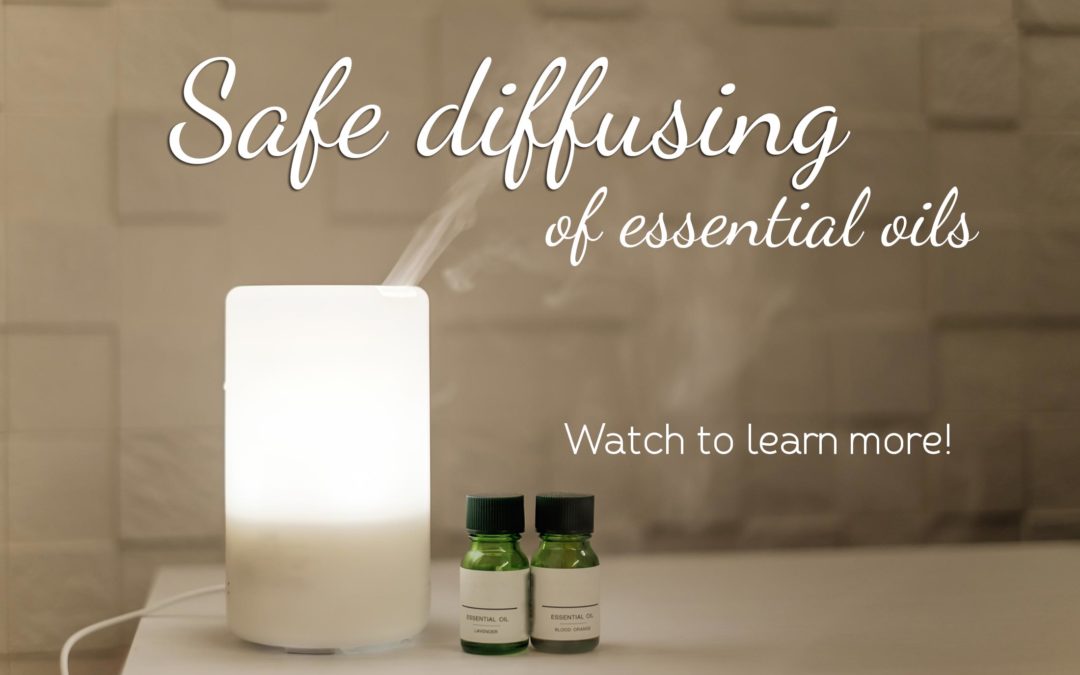
#1. The Risks of Diffusing Essential Oils in the Classroom
The risks of diffusing essential oils in the classroom. If we take into consideration the number of germs that are passed back and forth at school, it is not a surprise that some teachers have considered diffusing essential oils in the classroom. For those with minimal education, this may seem like a great solution to keeping sickness at bay and to keep attendance up, but it comes with a significant amount of risk. Many are told that essential oils are completely natural and safe for everyone, but this is not always the case. There are many things that need to be considered when diffusing in a classroom full of children with a variety of different health constitutions. The liability in this type of situation needs to be looked at closely.
I hope you enjoy my top essential oil blogs of all time. Stay tuned as I share the latest findings and most recent research with you!
Get your copy today!


Like so many practices in life, I encourage you to become educated on the proper use of essential oils. When using them, please do so cautiously, understanding that there is often misinformation on the internet. You can be assured that I support only educated and proven resources. While essential oils should not be feared they should be respected and used properly to ensure the safety of the individuals using them.
Please note that I am not a medical practitioner. The content of this website is provided for general informational purposes only and is not intended as, nor should it be considered a substitute for, professional medical advice. Do not use the information on this website for diagnosing or treating any medical or health condition. If you have or suspect you have a medical problem, promptly contact your professional healthcare provider. By using this website, you assume full responsibility and liability for your own actions.